For a long time, my approach to stretching was an afterthought. I’d finish a workout, feel a bit tight, and spend maybe 45 seconds doing a half-hearted quad stretch before running to the shower. But after trying a new mobility routine I can tell the difference it makes in my thirties.
Lately, I’ve been researching what it actually takes to feel great as we age. The information I’ve found is pretty clear: it’s not just about how much weight we can lift or how fast we can run; it’s about how well we can move.
Why a mobility routine is essential in your 30s
Over the last few weeks, I’ve been experimenting with adding just two or three mobility exercises to the end of my existing workouts.
- The Goal: To see if I could decrease that “stiff” feeling.
- The Results: It worked. My hips felt less locked up, and I stopped making that “old person noise” when I stood up from my desk.
These are some exercises I added:
- Deep squat
- Deep lunge
- Down dog
- Squat to stand
This is a great way to start in your mobility journey, but I’ve realized that if I want more benefits I need to go deeper.
The mobility routine I’m trying in my 30s
Instead of just doing it at the end of a workout, I’m starting a new experiment: a dedicated 15-minute mobility routine performed on its own.
I’m looking for a routine that doesn’t feel like a “workout”. The kind of work my 70-year-old self will thank me for. Here is what I’m looking for in:
- Spine Decompression: Moving beyond just touching my toes.
- Hip Functionality: Testing if I can improve my range of motion, not just “stretch” the muscle.
- Ankle & Wrist Health: I often forget these joints, but they are essential.

Mobility routine for women in their 30s?
In your 30s, mobility isn’t about being flexible enough to do a split for a photo (as I first believe). It’s about preparing for your future. It’s about ensuring that twenty years from now, we can still sit on the floor, hike a trail, or carry our own groceries without help.
My current mobility routine
I’m currently trying a sequence of 5 movements to see if a standalone routine makes a bigger difference than the “add-ons” did.
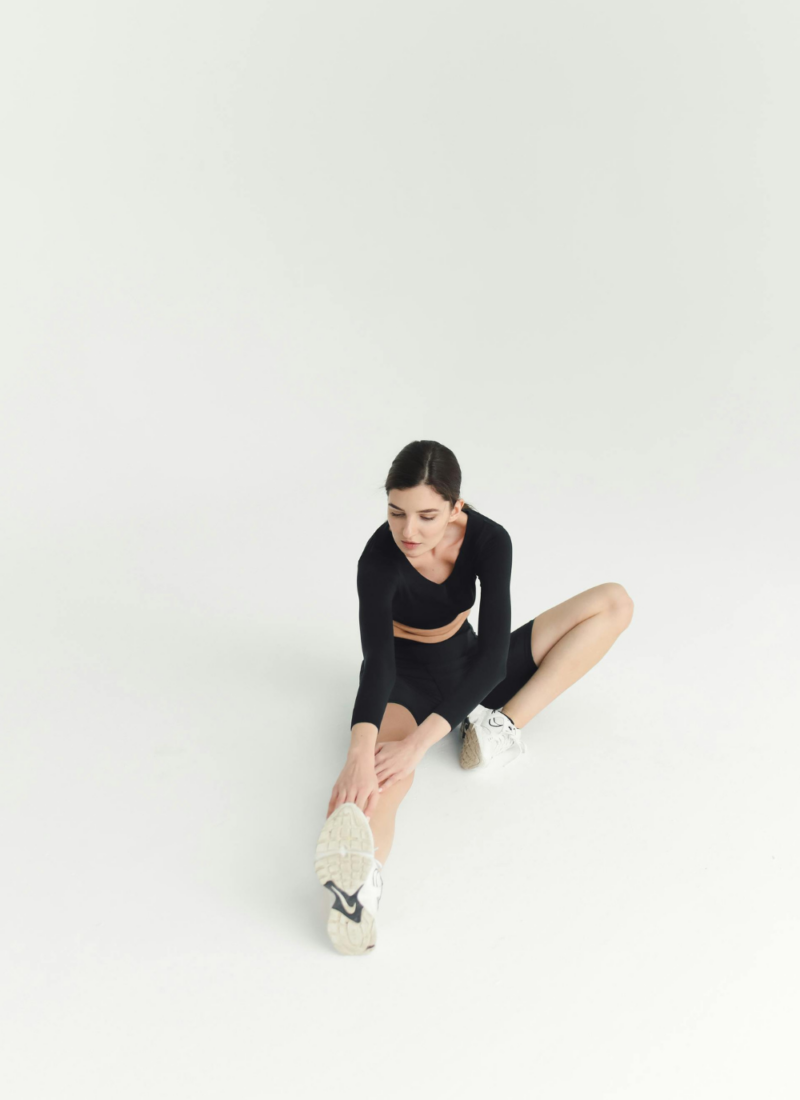
Here’s the routine I’m trying for reference:
- The 90/90 hip switch: Most of us sit too much. I’m testing if this unlocks my lower back by freeing up my hips.
- Cat-Cow: This would help with spinal decompression and ribcage mobility.
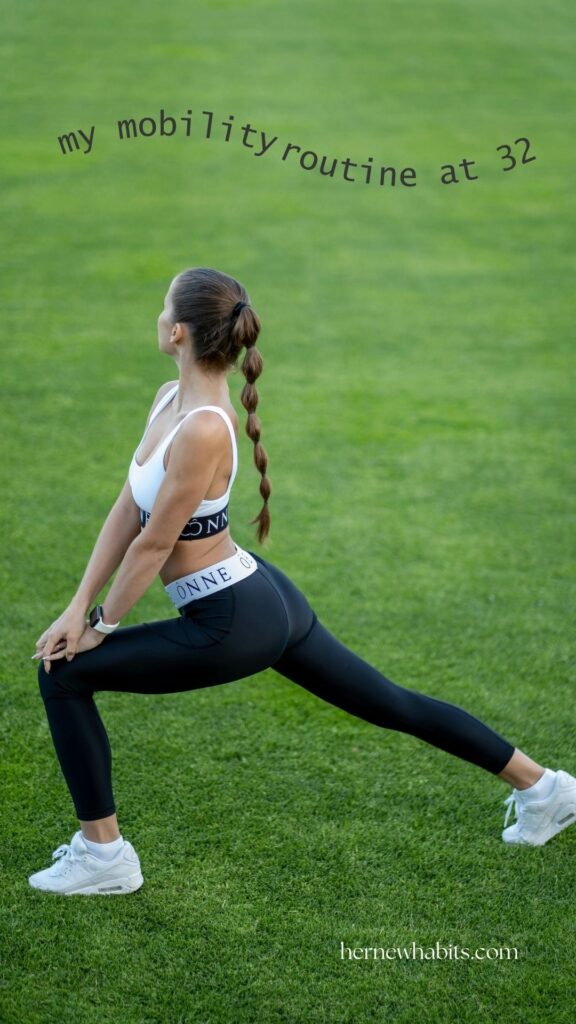
- The world’s greatest stretch: It involves T-spine (mid-back) rotation and hip flexor lengthening. This is a “compound” mobility move. If I only had 2 minutes, this is the one I’d test.
- Combat stretch: This improves your ankle range of motion. I’ve realized that knee pain often starts at the ankle. I’m researching if better ankle mobility changes how I walk and squat.
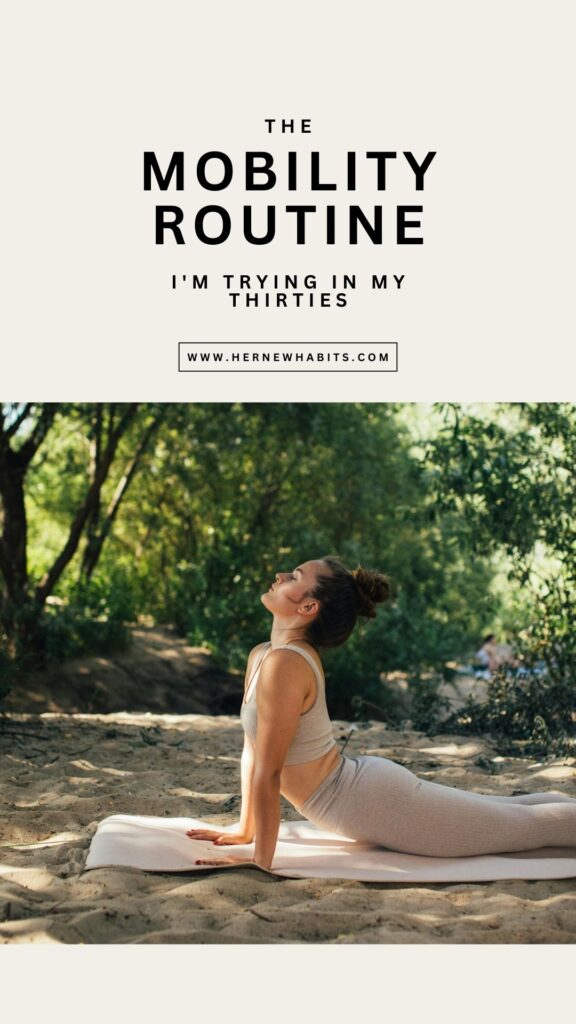
- Passive Hang (or camel pose if I’m at home): This one is to counteract the “tech-neck” hunch. I want to see if opening my chest daily improves my breathing and energy levels.

How I’m tracking my progress:
I’m not looking for a “six-pack” or a number on the scale. This is what I’m looking at to track my results.
- The 4 PM Stiffness Scale: On a scale of 1–10, how “creaky” do I feel at the end of the workday?
- Depth of Squat: Can I sit in a deep squat comfortably while reaching for a low shelf?
- Sleep Quality: Does a body that moves better during the day rest better at night?
- Photos: I’ll be taking photos every week while doing every exercise to see if my body is changing.
I’ll share my progress in a few weeks. Comment below if you want to try this new routine with me.
Leave a Reply